Tuesday, January 30, 2007

The Fortunate Boy

Taken from Silent Power: Chapter 36:

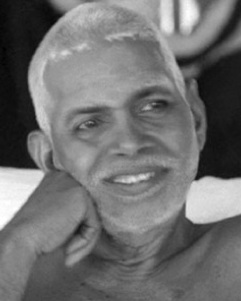
BHAGAVAN SRI RAMANA MAHARSHI is well known
to all as a great Saint. But only a few know of his
philanthropy and humanitarianism. Still fewer are those who
experienced his paternal and maternal affection.

Of all these one boy alone had the most enviable
opportunity of sleeping with Bhagavan and enjoying such
paternal treatment. One and only one had that golden privilege.

This was in 1920. Bhagavan had come to Skandasramam
from the Virupaksha cave and a small batch of devotees had
gathered round him. The greatness of the Saint echoed all over
the world. Devotees from all parts of India were coming for his
darshan. While males enjoyed the privilege of staying in the
Asramam up the hill with Bhagavan the whole day, ladies were
not allowed to remain there after sun-set.

Maharshi had a younger brother and sister, his elder brother
having passed away prematurely. This younger brother Sri
Nagasundaram Iyer who was working as a clerk in Tiruvengadu
temple had a small son. Fortunately for Sri Ramanasramam to
be and unfortunately for his family, he took sannyasa when his
wife died leaving a two year old boy uncared for. When both
the parents left this child an orphan, Maharshi's sister, popularly
known as `Athai' (aunt), took charge of the child and brought
him up with unstinted love, affection and care. It was not only
because she had no issue of her own but also because this boy
was the only descendant of their whole family.

This lad was taken twice or thrice a year to Tiruvannamalai
to see Bhagavan and his father (of the poorvasrama), henceforth
known as Sri Niranjanananda Swami, by Athai and her husband,
who were living in the far South. They were provided with a
house near the hill at Tiruvannamalai. Every morning Athai
would go up the hill and return to town in the evening, leaving
the boy behind at Skandasramam.

When at first Athai hesitated to do this fearing to cause
any kind of inconvenience to the much loved boy, Bhagavan
said that he would be well under his protection.

In the night the boy would eat from the sacred hands of Bhagavan and Bhagavan would make him lie down beside him, cover him with a blanket and lull him to sleep. He bestowed on
him all care that any sincere mother is capable of. Early in the
morning he would take the boy to the spring, clean his teeth
with powder, and wash his face. Athai would rush up in the
morning. Bhagavan with the lad seated on a culvert would tell
the child, "There comes your Athai. See in what hurry she runs
up to see you." As soon as she came up, Bhagavan would tell
her, "Take your boy, see, he is safe and sound."

This abundant affection for the boy did not in any way
prevent Maharshi from being strict with him. The following
incident makes it clear that Bhagavan gave the boy a practical
lesson which till now he has not forgotten.

At Skandasramam lived a monkey named Nondi, which
was the pet of all. Maharshi had ordered that whatever food was
served to his followers should also be served to the monkey, and
in case it was absent elsewhere, then its share should be kept

separate for its return. In such a case, the food would be kept
near a window inside the cave and the shutter closed but not
bolted. This was the custom.

On one of his periodical visits to the Asramam one day,
the boy had enjoyed the sweet dishes served to the devotees. He
had a little more than the usual share. The monkey being absent,
its share was kept near the closed window. The boy, having had
his share, went up to the window and began to eat out of the
monkey's as well. Suddenly, the monkey came and opened the
window only to see the boy eating its share. It gave the boy a
blow on his cheek. Shocked and terrified, the boy cried out and
devotees tried to console him. Bhagavan came to the spot,
understood the situation and told the boy: "You deserve it. Why did you want his (monkey's) share. You have had enough already. You ought to have been contented with that."
Instead of appeasing the beloved child, Bhagavan put him right. The boy
became silent and heeded Bhagavan's words.

"Do not touch the property of others. Be content with what you have. Share equally what you have. Divide it with one and all around you. Help the needy. Be not blind when a wrong is committed before you. Correct it if possible, or at least speak out for the right."
These are some of the golden truths the young
boy was able to grasp from the words of the Maharshi that day.


That blessed boy is Swami Ramanananda (Sri T.N. Venkataraman,
former president of Sri Ramanasramam, the only descendant of Maharshi's family).
Silent Power
For more on Nondi and other animals, see Nondi
--
The ignorant one thinks 'I am the body';
The enlightened knows 'I am the Self'.

The Self alone, the Sole Reality,
Exists for ever.
If of yore the First of Teachers
Revealed it through unbroken silence
Say who can reveal it in spoken words?

Monday, January 29, 2007

In Memory of Chinnaswami

On 29th January 1953, Bhagavan Ramana's younger brother, Niranjananda Swami, also known as Chinnaswami passed away. This excerpt is taken from Ramana Leela

WHAT next? Bhagavan once said, "So long as Swami
is there, nothing will happen. Later, voices will be
raised."
Bhagavan's demise became unbearable for several
bhaktas most of whom left within a couple of days.

Ramanasramam, then resembled Ayodhya after Rama's
departure, or a Vedic mantapa where the sacred fires had
been extinguished.

With the passage of time, the sorrow abated. Krishna
Bhikshu attended the first aradhana but could not stay
beyond a few hours. Even that short time was spent in
shedding tears – it was as if past memories expressed
themselves as tears. He concluded that he could no longer
visit the Ashram and for the next three years, he did not
do so. But this could not last forever. Bhagavan would
not allow one to be away forever. One who became a prey
of Arunachala could never pull back. Arunachala would
devour him.

After Bhagavan's nirvana the problems relating to the
running of the Ashram increased manifold. It was to avoid
complications in this matter that Bhagavan had got a will
prepared under the supervision of Justice Sundaram
Chettiar. According to the will, poojas have to be offered
to images in the Matrubhuteswara shrine. The Ashram
should be developed as a spiritual centre first under the
supervision of Niranjanananda Swami and later under
the supervision of Venkataraman and subsequently the
members of the family. This last condition was not
acceptable to some and they began creating problems even
during Niranjanananda Swami's time but by Bhagavan's
grace all the problems got resolved.

Unable to handle the management single-handedly,
Niranjanananda Swami formed a Managing Committee
with himself as life-President and carried on the
management according to the advice of the Committee.

The activities of the Ashram such as running the
cowshed, guest house, Veda-pathasaala, the poojas of
Matrubhuteswara, Yogamba and Srichakra were carried
out as usual with Chadwick assuming responsibility for
the Veda-pathasaala and the poojas. A sub-committee was
constituted to ensure publication of books – mostly
Bhagavan's works as well as Talks with Ramana Maharshi
(M. Venkataramaiah), diaries of Devaraja Mudaliar (Day
by Day with Bhagavan) and S.S. Cohen. The aim of the
Ashram was to publish all the works of Bhagavan.

Even the daily routine was kept up as before and this
included the various poojas and Veda-parayana at prescribed
timings.

During Bhagavan's time, Niranjanananda Swami
would seek his advice on any problem and hence did not
feel running the Ashram burdensome, but now the situation
changed. Further, at that time visitors who came to have
Bhagavan's darshan donated liberally. But later their numbers

as well as the donations gradually declined. Not only that,
some came as friends ready to help but in course of time
became hostile and turned foes. Yet others attempted to
alter the arrangement of hereditary management. Yet
Chinnaswami tried hard to carry out the management by
surrendering himself to Bhagavan. His health was impaired
and he lay sick for several months in the Ashram hospital.

He kept his peace looking at Bhagavan's photographs
hanging in the room all around. It was that Mahatma's
power that looked after him all the time.

Meanwhile, another blow struck Chinnaswami. His
younger sister, Alamelu who brought up his mother-less
son, Venkataraman and saw through his wedding, fell
grievously ill. Much earlier in 1938 Chinnaswami had
summoned Venkataraman to assist him in the Ashram
work. Alamelu and her husband Pitchu Iyer, unable to
leave the boy whom they were bringing up as their own
son, moved to Arunachala and assisted at the Ashram. As
there was a regulation that women could not stay in the
Ashram premises, after nightfall a separate house had to be
hired for their stay beyond the Ashram premises. After
some years, Pitchu Iyer was able to build a house in a
locality called Ramana Nagar. He had generous help from
Bhagavan's devotees to build the house.

Alamelu who was Venkataraman's aunt came to be
known as 'aunt' by all the ashramites. She was usually
quiet, non-interfering and sweet-tempered. She had a
profound devotion for Bhagavan and when he was ill
pleaded with him with tears in her eyes that he should

cure himself. Bhagavan said to her: "Don't be sorry, my
dear. What is to happen will happen. You leave your cares
to me and be peaceful."
After Bhagavan's niryana her health deteriorated and
she was confined to bed for six months. On 3 January 1953 she breathed her last with Bhagavan's nama on her
lips. There was an extraordinary glow on her face at the
time of her expiry.

The passing away of his sister was a great blow to
Chinnaswami. With an aching heart he thought he had
had enough of the world and begged of his Lord, Ramana,
to take him away. As his end approached on 29 January
1953, he summoned his son Venkataraman, other family
members and close associates and gave his last message to
Venkataraman:

My conscience is clear, my hands unsoiled. I had
never used Ashram funds for myself and everything
in the Ashram belongs to Bhagavan. Preserve it
carefully and utilize it wisely. Dedicate yourself
wholeheartedly to the service of Bhagavan. By doing
so, you will earn his grace in abundance. Let sraddha,
faith and truth become inalienable parts of yourself.

Uphold our tradition in the conduct of the Ashram affairs. I have toiled to uphold them.

Chinnaswami became the sarvadhikari of the Ashram
in 1930. Until be became the sarvadhikari many outsiders
did not even know who he was, he was so self-effacing. He
conducted the affairs of the Ashram for twenty two years.

Upon his passing away, Vedic mantras were chanted
and the entire Ashram reverberated with them. In the
coconut grove opposite Matrubhuteswara shrine a Samadhi
was erected for him. He did not select this spot but the
choice would have pleased him immensely.

He was a very amiable person, but was prone to get
angry at the slightest provocation. He believed in wielding
the rod to correct errant persons. He possibly was not
learned but it could be that he sought liberation through
service to Bhagavan and his bhaktas – a service which was
unremitting and unsparing. The only yoga he knew was
that of seva and perhaps his only faith was that through
seva he would earn Bhagavan's grace. As his concern for
the Ashram was uncompromising some people perhaps
did not appreciate him. He would not hesitate even to
disturb devotees from their dhyana for Ashram purposes.

And he was meticulous in accounting for money.

It was because of his dedication that quite a number
of buildings and facilities came to be provided at the
Ashram, which enabled devotees to worship Bhagavan
without any difficulty.

Standing monuments of his activities are the
acquisition and establishment of Sundara Mandiram at
Tiruchuzhi and Ramana Mandiram at Madurai. After
Chinnaswami, his son Venkataraman took over as the
President of the Board of Trustees.

Friday, December 29, 2006

Bhagavan Ramana always with us

As I leave for Beloved Arunachala in just a few minutes, I have these (hurried) words to say to the reader who stumbles by here.

The reminiscences of Bhagavan's fortunate devotees are constant reminders that Bhagavan Ramana is not only with us each moment when we live, but will also be us when we leave this body. You have only to read the reminiscences of Sri Natesa Iyer in Power of Presence 3, or Ramana Smriti to know what I mean.

There is really no need to be unhappy ever, or ever to fear 'death'. Happiness for the devotees of Bhagavan is here and now. When we recognize Ramana as our sadguru, that is truly the end of all our suffering (whether we are "realized" or not).

Ramana's presence is not some imagined feeling, some illusion of the desperate mind; the mind sunk in love and surrender to Prabhu Ramana feels His presence as tangibly as it feels anything else around it.

For those of us, for whom this life is but a continuation of a previous one lived in His love and devotion, for those of us whose mind and soul has completely identified with His bhakti, for us Lord Ramana is the only one present.
-  Offered at His Blessed Feet.

Web versions of Bhagavan Ramana Maharshi Books

http://benegal.org/ramana_maharshi/books/books.html

Several web versions of the Ramana Maharshi's books are available at  this location with more appearing in end January. Some works have been hyperlinked for ease of reading and research, and hyperlinking will continue when the team returns from Arunachala.

If you like the format, and would like to request some titles to be put up, please leave a comment here. Feedback may be posted here, too.

Wishing you the best of bhakti in the new year.

Friday, December 15, 2006

Everlasting prostration at His Feet

Sri GV Subbaramayya's words in praise of Bhagavan Ramana Maharshi beautifully epitomise the devotion of followers for Bhagavan. Some excerpts (p163):

O my Divine Love! People run to the forests and mountain caves for solitude to practice meditation, but You drew me to meditate on You, without effort, everywhere.
People renounce their possessions, mortify their flesh, and do hard penance to achieve self-control. But without the least deprivation, denial or suffering, You control me.
People seek a Master and serve him, longing for initiation into spiritual mystery. But You, my master, seek and serve me in order to reveal Yourself fully to me.
People after strenuously striving for many lives, attain Self-realization. But You made me, here and now, without the least effort, realize myself in You.
What a wonder! What seems so difficult to all people is easiest for You.


I know not what other people call love. My love is only to serve and suffer and die for You.
I know not what other people term devotion. My devotion is only to bind my eyes to Your blessed feet and follow them always .

I know not what other people name heaven and hell. My heaven is only in Your smile, amd my hell is only in Your tear.
I know not what other people call life and death. My life is only in Your presence, and my death is only in Your disappearance.

I know not what other people mean by war and peace. My war is only to fight against the obstacles in my way to You, and my peace is only to reach You, and fall at Your feet in one everlasting prostration.

Indeed i know nothing. I only know that You are everything to me.

See also: Sri Ramana reminiscences and Power of Presence.

Be like me ... remember me

Bhagavan Ramana spoke these words to G V Subbaramayya (p155):

Why can't you be like me ... this ashram has grown around me but I am ever the same. The sun rises and sets. To me there seems no other change. Through all the ups and downs of life, be like me, and ever you are prone to sadness, remember me.

Thursday, December 14, 2006

Name superior to form

Once a devotee (p 71) said to Bhagavan: Bhagavan, earlier whenever I thought of you, your form would appear before my eyes. But now it does not happen. What am i to do? Bhagavan advised:

You can remember my name and repeat it. Name is superior to form. But in the course of time, even the name will disappear. Until then repeat the name.

Leave it to the Guru

Once a visitor wept to Bhagavan that he felt no improvement in himself despite coming to Bhagavan. Bhagavan replied:
On this road there are no milestones. How can you know in which direction you are going? Why dont you do what the first-class railway passenger does? He tells the guard his destination, locks the doors and goes to sleep. The rest is done by the guard. If you trust your Guru as much as you trust the railway guard, it would be enough to make you reach your destination. Your business is to shut the door and windows and sleep. The guard will wake you up at your destination.

Tuesday, December 12, 2006

Offer yourself to God

Echammal once wished to perform a puja which required a very large number of tulsi (similar to basil) leaves.
One day (circa 1942) Bhagavan told her:

People will not allow the leaves to remain where they are, beautiful and alive. They pick them, pierce them, thread them. The poor leaves and flowers and mercilessly maimed and killed. Does God need such worship? Don't they belong to him when they are on their trees? We do these horrible things to flowers, but we would not offer our own selves to God
(Letters, letter 42. Also p88)

Remembering Bhagavan

Sambasiva Rao once overheard Bhagavan telling someone: If you must get angry, get angry with good people. For if you get angry with bad people, you may get it back with interest.

He asked Bhagavan whether there was really no danger in abusing good people.

Bhagavan replied smiling: "When good people are abused, they may not retaliate. However, they are hurt, and so the abuser may have to suffer. There is also a saying that he who curses good people, gets all the bad that may still be left in them. If you want to curse at all, curse Bhagavan. He will not be hurt and he is without sin. You are safe in cursing Him.

"He wants only to be remembered. The mood in which you remember Him is of less importance. Were it otherwise, how could Ravana and Sishupala get salvation?" (p91)

Monday, November 13, 2006

The Eternal Sadguru

In His final words of assurance to devotees in 1950, Bhagavan Ramana said, "They say I am going, but where can I go? I am Here."

In the days leading to His leaving the body, Bhagavan did not make any attempt to appoint a successor, or to send seekers to another guru. Had there been a need to transfer seekers, Bhagavan, out of His deep compassion, would have certainly done so.

Never when He was in the body did He seek glory, and thus there is no reason to think He would do so at this moment (by saying that He is here). (For example, we know that He never claimed to having devotees)

Additionally, knowing His honesty, one cannot doubt the statement that He would always be here, to guide seekers.

Thus, his final spoken statement has to be taken literally. Bhagavan Sri Ramana Maharshi is here, guiding those who consider Him to be their sadguru.

He is the eternal sadguru.

Bhagavan's Feet always with us


"I wanted to show my gratitude to Bhagavan by touching His feet, but I knew this was not allowed by His attendants. I confided this desire to Mrs Talyarkan, thinking she would keep it a secret. But in the hall, in front of everyone, she told Bhagavan, "Roda has a strong desire to touch your feet." I was so embarrassed.

Bhagavan said nothing at the time, but after lunch that day, He stopped near me, said something in Tamil to a nearby devotee, and asked him to translate it for me.

The devotee said, "Bhagavan says, "Why should she want to touch my feet? My feet are always on her head."


Forwarded by a kind reader - an account of Ms Roda McIver from Power of Presence by David Godman

Purity of Mind

Bhagavan Ramana explains about purity of mind and we link it with another question on why some seekers get a glimpse of the Self, but it is not permanent.

Mr K. R. V. Iyer (Talk 337, Jan 22, 1937): How is the mind to be purified?

Bhagavan: The sastras say: "By karma, bhakti and so on". My attendant
asked the same question once before. He was told, "By karma
dedicated to God". It is not enough that one thinks of God while
doing the karma, but one must continually and unceasingly think
of Him. Then alone will the mind become pure.

The attendant applies it to himself and says, "It is not enough that I
serve Sri Bhagavan physically. But I must unceasingly remember Him".

A question was raised as follows by Maj. A. W. Chadwick (Talk 95, Nov 13, 1935):-
 
Mr. Edward Carpenter, a certain mystic, has written in a book that he
had Self-Realisation on some occasions and that its effects lasted
sometimes afterwards, only to be gradually lost. Whereas Sri Ramana
Gita says, "Granthi (knot = bondage), snapped once, is snapped for
ever." In the case of this mystic, the bondage seems to have persisted
even after Self-Realisation. How can it be so?

Dev.: Having once experienced the Supreme Bliss, how can one stray
away from it?
Bhagavan: Oh yes! It happens. The predisposition adhering to him from time
immemorial will draw him out and so ignorance overtakes him.
D.: What are the obstacles to remaining steady in unbroken Bliss?
How can they be overcome?
B.: The obstacles are:
(1) Ignorance which is forgetfulness of one's pure being.
(2) Doubt which consists in wondering if even the experience was
of the Real or of the unreal.
(3) Error which consists in the "I-am-the-body" idea, and thinking
that the world is real. These are overcome by hearing the truth,
reflection on it and concentration.

The talk goes on ... and comes to the necessity for purity.

Devotee.: It looks then as if even hearing the Truth is limited to a very few.

Bhagavan: The seekers fall into two classes; kritopasaka and akritopasaka.
The former having already overcome his predisposition by steady
devotion, his mind thus made pure, has had some kind of experience
but does not comprehend it; as soon as instructed by a competent
master, permanent experience results.

The other class of seeker needs great effort to achieve this end.
How will the hearing of the Truth, reflection and concentration
help him?

(By a strange coincidence, this conversation happened exactly 71 years back)

Friday, November 10, 2006

Mental Connection with Guru

This flow of power from the Guru can be received by anyone whose attention is focused on the Self or on the form of the Guru; distance
is no impediment to its efficacy. This attention is often called sat-
sanga, which literally means `association with being'. Sri Ramana
wholeheartedly encouraged this practice and frequently said that it
was the most efficient way of bringing about a direct experience of
the Self. Traditionally it involves being in the physical presence of
one who has realized the Self, but Sri Ramana gave it a much wider
definition.

Sri Ramana Maharshi said that the most important element in sat-sanga was
the mental connection with the Guru; sat-sanga takes place not only
in his presence but whenever and wherever one thinks of him.

- Be As You Are, Chapter 9, Silence and Satsanga

Tuesday, November 07, 2006

Sri Shardamma to Lakshmana Swamy

A letter to Swamy (source):

Sri Lakshmana Bhagavan. You are God who gives me bliss. I cannot leave you even for a minute. You are my mother, father, Guru, God. Whatever you say I will do. I wish to stay always with you, and i am only happy when I am with You. I have no other direction to go. I cannot forget your name, and i shall always be thinking about your name and form. You are the foundation for me, and my burden is yours forever. If i realize the Self i shall have no business with you. Till then i have to stay with you. You attracted my mind, and now you have stolen it.


A poem at the end of the letter:


In my difficulties you will hear my words and you will help me. In leaving me you cannot go anywhere for you are the Self. Please don't cast me aside. I am surrendering my life to you. What use is this life without looking at your form?

Monday, November 06, 2006

Surrender


Following are some quotes of Bhagavan Ramana Maharshi on Surrender.
Excerpted from Be As You Are.

(The second way of transending the personal self is) Completely
surrendering all responsibility for one's life to
God or the Self. For such self-surrender to be effective
one must have no will or desire of one' own and one must be
completely free of the idea that there is an individual person
who is capable of acting independently of God.

The second method, of surrendering responsibility for one's life to God,
is also related to self-enquiry since it aims to eliminate the 'I-
thought by separating it from the objects and actions that it constantly
identifies with. In following this practice there should be a
constant awareness that there is no individual `I' who acts or desires,
that only the Self exists and that there is nothing apart from the Self
that is capable of acting independently of it. When following this
practice, whenever one becomes aware that one is assuming
responsibility for thoughts and actions - for example, `I want' or `I
am doing this' - one should try to withdraw the mind from its
external contacts and fix it in the Self
. This is analogous to the
transfer of attention which takes place in self-enquiry when one
realizes that self-attention has been lost. In both cases the aim is to
isolate the 'I'-thought and make it disappear in its source.

Sri Ramana himself admitted that spontaneous and complete
surrender of the `I' by this method was an impossible goal for many
people and so he sometimes advised his followers to undertake
preliminary exercises which would cultivate their devotion and
control their minds. Most of these practices involved thinking of or
meditating on God or the Guru either by constantly repeating his
name ( japa) or by visualising his form. He told his devotees that if
this was done regularly with love and devotion then the mind would
become effortlessly absorbed in the object of meditation.
Once this has been achieved complete surrender becomes much
easier. The constant awareness of God prevents the mind from
identifying with other objects and enhances the conviction that God
alone exists. It also produces a reciprocal flow of power or grace
from the Self which weakens the hold of the 'I'-thought and destroys
the vasanas which perpetuate and reinforce its existence. Eventually
the 'I'-thought is reduced to manageable proportions and with a little
self-attention it can be made to sink temporarily into the Heart.
As with self-enquiry, final realization is brought about automatically
by the power of the Self. When all the outgoing tendencies of the
mind have been dissolved in the repeated experiences of being, the
Self destroys the vestigial `I'-thought so completely that it never rises
again. This final destruction of the `I' takes place only if the self-
surrender has been completely motiveless. If it is done with a desire
for grace or Self-realization it can never be more than partial
surrender, a business transaction in which the 'I'-thought makes an
effort in the expectation of receiving a reward.
Complete surrender does require that you have no desire of your own. You must be satisfied with whatever God gives you and that means having no desires of your own.
Q: I want to know what the steps are by which I could achieve surrender. 

A: There are two ways. One is looking into the source of `I' and
merging into that source. The other is feeling `I am helpless by myself,
God alone is all-powerful and except by throwing myself

completely on him, there is no other means of safety for me.
By this
method one gradually develops the conviction that God alone exists
and that the ego does not count. Both methods lead to the same goal.
Complete surrender is another name for jnana or liberation.
 ... But the fact is that you can have no likes or dislikes after your surrender;
your will should
become completely non-existent, the Lord's will taking its place. The
death of the ego in this way brings about a state which is not
different from jnana. So by whatever path you may go, you must
come to jnana or oneness.

You must only trust God.
Surrender to him and abide by his will whether he appears or
vanishes. Await his pleasure. If you ask him to do as you please, it is
not surrender but command to him. You cannot have him obey you
and yet think that you have surrendered. He knows what is best and
when and how to do it. Leave everything entirely to him. His is the
burden, you have no longer any cares. All your cares are his. Such is
surrender. This is bhakti.
When one has completely surrendered oneself at the feet of Siva,
thereby becoming of the nature of the Self, the resulting abundant
peace, in which there is not even the least room within the Heart for
one to make any complaint about one's defects and deficiencies,
alone is the nature of supreme devotion. One's thus becoming a slave
to the Lord and one's remaining quiet and silent, devoid even of the
egotistical thought `I am his slave', is Self-abidance, and this is the
supreme knowledge.

Bhagavan on Destiny


There are only two ways to conquer destiny or be independent of it. One is to enquire for whom is this destiny and discover that only the ego is bound by destiny and not the Self, and that the ego is non-existent.

The other way is to kill the ego by completely surrendering to the Lord, by realising one's helplessness and saying all the time, `Not I but thou, O Lord ', giving up all sense of `I' and `mine' and leaving it to the Lord to do what he likes with you. Surrender can never be regarded as complete so long as the devotee wants this or that from the Lord. True surrender is love of God for the sake of love and nothing else, not even for the sake of liberation. In other words, complete effacement of the ego is necessary to conquer destiny, whether you achieve this effacement through self-enquiry or through bhakti marga.
Quote of Sri Ramana Maharshi by  D Mudaliar, also last page of Be As You Are

Sunday, November 05, 2006

The purpose of Creation


(Excerted from Be As You Are - The Teachings of Sri Ramana Maharshi, p264)
Q: What is the purpose of creation?

A: It is to give rise to this question. Investigate the answer to this
question, and finally abide in the supreme or rather the primal source
of all, the Self. The investigation will resolve itself into a quest for
the Self and it will cease only after the non-Self is sifted away and
the Self realized in its purity and glory.

There may be any number of theories of creation. All of them extend
outwardly. There will be no limit to them because time and space are
unlimited. They are however only in the mind. If you see the mind,
time and space are transcended and the Self is realized.
Creation is explained scientifically or logically to one's own
satisfaction. But is there any finality about it? Such explanations are
called krama-srishti [gradual creation]. On the other hand, drishti-
srishti [simultaneous creation] is yugapat-srishti. Without the seer
there are no objects seen. Find the seer and the creation is comprised
in him. Why look outward and go on explaining the phenomena
which are endless?

Thursday, October 26, 2006

Bhagavan Ramana on surrender, free will and Divine Grace


Forwarded by a kind reader:

Referring to Sri Krishna's telling Arjuna: "Deluded by Maya you refuse to fight, but your own nature will force you to fight;" a devotee asked Bhagavan whether we have no free will at all. Bhagavan replied: "You always have freedom not to identify yourself with the body and the pleasures and pains that come to it as its prarabdha."
One summer afternoon I was sitting opposite Sri Bhagavan in the Old Hall with a fan in my hand and said to him: "I can understand that the outstanding events in a man's life, such as his country, nationality, family, career or profession, marriage, death, etc., are all predestined by his karma, but can it be that all the details of his life, down to the minutest, have already been determined? Now, for instance, I put this fan that is in my hand down on the floor here. Can it be that it was already decided that on such and such a day, at such and such an hour, I would move the fan like this and put it down here?"
Bhagavan replied: "Certainly." He continued: "Whatever this body is to do and whatever experiences it is to pass through was already decided when it came into existence."
Thereupon I naturally exclaimed: "What becomes then of man's freedom and responsibility for his actions?"
Bhagavan explained: "The only freedom one has is to strive for and acquire the Jnana which will enable him not to identify himself with the body. The body will go through the actions rendered inevitable by prarabdha (destiny) based on the balance sheet of past lives, and a man is free either to identify himself with the body and be attached to the fruits of its actions or to be detached from it and be a mere witness of its activities."
From various other talks that I had with him, I am convinced that this was Bhagavan's teaching. I will only refer here to the classic reply he gave to his mother when, as a young Sage, he rejected her tearful request to go back home with her. "The Ordainer controls the fate of man according to his prarabdha. What is destined not to happen will not happen, try as you may. What is destined to happen will happen, try as one may to prevent it. This is certain. So the best course is to remain silent."
However, if the law of karma as pure cause and effect is so supreme as to be absolutely inviolable and inexorable, one may ask of what use is religion, God or prayer. There seems to have been no time when man did not turn to an all-powerful and all-loving God who could save him from his sins and suffering and give him peace and bliss. Starting from the Vedic times and passing through the period of the great bhaktas, both Saivite and Vaishnavite, and down to comparatively recent times, there is a great mass of religious literature which states quite clearly that whatever sins a man may have committed, God in His mercy can save him. They have also stated that all karma, including prarabdha, can be destroyed by the Grace of God, like cotton by fire. Western saints and mystics have said the same thing and have ridiculed the idea that because God is just, impartial and righteous He cannot save the sinner but must punish him first for his transgressions. For if that were so, what would become of the other attributes of God such as Mercy, Love, Fatherhood and Motherhood? The Vaishnavites stress the quality of Vatsalya or loving-kindness in God and illustrate it by the vatsalya of a cow which, as soon as its calf is born, begins to lick it all over, oblivious to the fact that it is unclean. They say God does not wait for the sinner to become pure before He can save him, but saves him just as He finds him if only the man desires, cries out for and supplicates salvation. If a man who is suffering turns to God for help and relief in full faith that God can save him he is sure to be saved. That is what the scriptures say and what countless saints have declared. Christ said: "Come unto me all ye that are weary and heavy laden and I will give you rest. Fear not." Lord Krishna said almost the same thing. When Arjuna, after hearing what Krishna had to say about all the different kinds of yoga which could secure Liberation, complained that he was confused by all these instructions and felt that he could not follow them, Krishna said: "Then give up all dharmas and take refuge only in Me. Grieve not. I will save you from all your sins.
What is demanded here is total surrender to God by throwing oneself completely on God's Mercy and not desiring anything for oneself. Leaving everything to God the all-loving and all-knowing is not so easy as it may sound. However, the point I want to make here is that Grace is all-powerful and that even the law of karma by which, they say, a man must reap what he has sown, with no exception whatsoever, can be overcome. I am strongly inclined by temperament to believe this, and I believe that Bhagavan has confirmed it for me. I will quote here what I wrote on the subject on pages 100 and 101 of my little book My Recollections of Bhagavan Sri Ramana
"Another point on which I more than once argued with Bhagavan is the extent to which Grace can override prarabdha or destiny. My main line of argument throughout was (and my conviction now as ever is) that God is all-powerful and that nothing is impossible for Him, and that if one got and could get only what one had worked for and merited, there would be no place at all for Grace. Most often Bhagavan remained silent when I indulged in such arguments either by myself or with others, some of whom took my side and others the opposite side; but from various remarks and observations that he made on different occasions I have come to the conclusion that the following is his attitude in the matter: 'Of course, nothing is impossible to God, but everything happens according to the order established by God's will or plan and exceptions are very few. How many Markandeyas, are there in our Puranas?'
"On the other hand, many authoritative books have clearly said (and Bhagavan has quoted them with approval) that one look from a Jnani can save us from the effects of all our karmas, past or present, prarabdha included. And Sri Janaki Matha has published in her Tamil journal that when she discussed this question once with Bhagavan, maintaining that His Grace can help one even to overcome prarabdha, he told her: 'If you have such faith it will be so.' "
I find that I cannot usefully add anything to this quotation, but I should perhaps explain the reference to Markandeya. It is said in the Puranas that Markandeya was destined to live for only sixteen years and that he prayed to Siva and received the boon that he would be perpetually sixteen. Bhagavan mentioned it to stress his point that the obvious and spectacular intervention of Divine Grace is very exceptional.
It is said in the Upanishads that one cannot say when or why or to whom Grace will come. It is said that it will fall only on him whom it chooses. A hundred might make the effort and yet only one or two of them might be chosen. No one can predict anything about Grace except that it is unpredictable.
It will be interesting here to turn to the following quotations from Paul Brunton given in my book Day by Day with Bhagavan.
"Divine Grace is a manifestation of the cosmic free will in operation. It can alter the course of events in a mysterious manner through its own unknown laws, which are superior to all natural laws, and can modify the latter by interaction. It is the most powerful force in the universe.
"It descends and acts only when it is invoked by total self-surrender. It acts from within, because God resides in the heart of all beings. Its whisper can be heard only in a mind purified by self-surrender and prayer."
The above two quotations were contained in a book called Divine Grace Through Total Self-Surrender by one D. C. Desai, and Bhagavan himself, on going through the book, read them out to us.
My saying that God's Grace is unpredictable and has power to remit sins and erase karma should not be taken to mean that this Grace can be obtained without effort. On the contrary, great effort is necessary. A man, recognising that he cannot raise himself by himself, must fall at the feet of God and cry: "Lord, I am weak and powerless. You alone can save me. I take refuge in You. Do what You will with me." This is the effort that must be made: an effort towards attainment of effortlessness after realizing the uselessness of our own puny efforts.
Bhagavan has strongly commended the path of total self-surrender as a sure way to salvation and has called devotion the 'Mother of Jnana'. That well-known early devotee of Bhagavan, Sivaprakasam Pillai, for whom Who am I? was written, says in one of his poems: "To everyone you give only this instruction: 'Find out who you are.' If, after that, they humbly ask for more guidance, you tell them as your final word: 'There is a power which moves you and me and all others. Lay your ego at the feet of that Mother.' "
From various actions and remarks of Bhagavan I have not the slightest doubt that he regards the path of surrender as the best way for me. It is true that he maintained quite definitely that final Liberation is only possible through Knowledge of the Self, which is being the Self, because Knowing is Being; but that comes inevitably to one who has completely surrendered.
-- The Mountain Path, 1967, Vol. 4, No. 2

Thursday, October 19, 2006

More on Sri Matha

A kind reader sends us more details on the life of Sri Bhagavan. We discover, to our joy, a great devotee of Bhagavan Ramana Maharshi .

"Always nurture divine thoughts, obliterate likes and dislikes and passions, and surrender to the Guru"
 
From the biography of Sri Matha...

[Sri Matha was a Bhakta-Jnani, an incarnation who, according to the biography, Ramana considered a born Jnani and to whom he was just the Causal (Karana) Guru. Her enlightenment experience confirms Ramana's description and includes realization of the One, Universal, Transcendental Self as Heart-Light and Amrita Nadi as a "pillar of light", rising up to the sahasrara and above, as described by Ramana. It is noteworthy according to this biography that Sri Yatindra, who spent much time with Ramana early on, and whose questions which Ramana answered formed the basis of Chapter 18 of Ramana Gita, had wandered all over India and considered Sri Matha as one with great attainment, unequalled in Guru Bhakti. At the age of eight, she heard an old pious man speak of the Supreme Lord, and "enquired as to who God was and where he could be found". She was initiated into a mantra and within a few days was regularly visited with a divine vision of Lord Krishna from the nearby temple. Even as a child, she exhibited all the characteristics prerequisite for a successful sadhana, being peaceful, humble and having faith in God, desiring the life of a sadhu. Although having no physical guru before she met Ramana, she was served through grace in finding a husband who supported her spiritual endeavor, and through her spontaneous meditations and pujuas, and devotion to Sri Subrahymanya, who appeared to her and guided her in subtle form and in the guise of wandering ascetics who came to her. After one visit, she began to spend the night not in a sleep of ignorance but "...in a state of awakening, with glorious revelations of the manifold aspects of the Supreme Self. "...Once while meditating on the all-pervasive nature of the Creator, she saw a dried up plant, with no life in it. A voice was heard: "My ommipresent and all pervasive nature in the cosmos is like this." With these words, a jyoti in the form of a ray of lightning flashed into the dried up stem of the plant. In an instant [the plant] was full of fresh green and tender leaves radiant with life..." A whole night, she enjoyed the Eternal Dance of Sri Krishna and Radha. "...Sri Matha always says that the dance of Sri Krishna with Radha should not be looked upon in the earthly sense of the term. It symbolizes the merger of the purified Jivatma (individual soul) with Paramatma (The Universal Self)..."One day, Sri Subrahymanya appeared as an ascetic at her door and told her he was giving her guruhood (preceptorship) on a par with his. She asked him for a physical guru; "...however wonderful and marvelous our spiritual achievments may be, it is possible that before obtaining real perfection, we may be under a sort of hallucination and believe that Real Wisdom has dawned upon us, while we may actually be for from it..." and was told: "...Am I not your Guru? Anyhow, if that be your wish, there is a Mahatma by name Sri Ramana Maharshi in Tiruvannamalai. You may go and have his darshan..."

[October 1936] "...It was said that without the guidance of a Guru an aspirant could fall into mental disorder, and Bhagawan, who was God to her, was reported to have said that he was not a Guru and had no disciples...Probably in response to her thoughts, Bhagawan suddenly got up from the couch and went out of the hall, contrary to his daily routine. Considering this a gesture of the Grace of the Lord, Sri Matha also went out....Soon, she saw Bhagawan coming from the side of the cattle shed with an attendant and her heart throbbed with joy. In an instant, she lay prostrate at the Holy Feet of Bhagawan in obeisance, with tears of joy trickling down her cheeks. The attendant ordered her roughly to get up and not obstruct Bhagawan's path. Riled by this remark, Bhagawan told him curtly to stand aside. Mathaji quickly pour out her heart before him, telling him of her spiritual experiences and beseeching him for protection and removal of the obstacles in her quest for Liberation. She mentioned also her fear of becoming deranged through having no Guru to guide her on her quest. Bhagawan, whose compassion is infinite, replied: "Who told you that you have no Guru? Don't get disheartened. I am here as your Guru; nothing will upset your mind..."

[11th December 1937] "...While keeping wide awake, Sri Matha had a glorious vision of Lord Krisha, dazzling her eyes and pervading all things in the universe, animate and inanimate...The Holy Spirit of the Universal Lord was vibrating its unbounded radiance to her in an endless fashion...The grace of Bhagawan was flowing in its entirety toward her...The whole of the next day she saw the eternal dance of the Lord Krishna on the Kaliya, in her heart...According to Sri Matha the hideous hoods of the Snake King Kaliya represent egotism, lying dormant in the physical body, prarabdha karma, and birth and death...So an aspirant should, by all efforts at his command, strive to acquire the means for self-realization rather than aim at realization itself, which comes spontaneously when the means are acquired..."

"...[October 12, 1937, at about 11 p.m.] Sri Matha felt what seemed to her like a powerful explosion on the back of her head. She leapt up from bed, unable to bear the strain. There was a flare-up throughout the spinal cord from the muladahara right up to the sahasrara in the brain...like lightning all along the sushumna...It even tried to burst open the top of her skull and she had the impression that the force was trying to escape into the ether beyond...[After 26 days of ordeal she went to see Ramana]...Even before Sri Matha informed Bhagawan of her experience, in a mellifluent voice, Bhagawan spoke to her about a similar experience He had in his early [pre-enlightenment] days: "Look here. Don't get frightened. One day while I was lying in bed in Tiruchuli I felt as if I were being bombed from inside at the back of my head"..."

"...[11 January 1938]...Maha Maya appeared before Her, opened a window and pointing to the open expanse outside said "Look at the Void. For a week from now on I will keep myself away from you". This, according to Sri Matha, implied that Saguna Parashakti became one with Sir Matha in Nirguna (Formlessness)..."
(12th January 1938) [Sri Matha's Moment of Realization] "...In a few seconds she [Sri Matha] was drowned in meditation. Right from her feet, her limbs became rigid gradually and soon there was no sign of life in the body up to the stomach. She also could not stretch out her hands, With the torpidity slowly gaining ground, Sri Matha thought that she was nearing her end and that he life would soon be extinct. But as she was ever ready to shuffle off her physical body, there was no fear of death. Her mind withdrew itself from all thoughts of objectivity and was beholding Bhagawan Sri Ramana in her heart.

She could see the whole of her inside in an X-rayed fashion. Sri Krisha with his captivating looks was sitting in her sahasara padma (centre of illumination) as the 16 year old Shyama Sundara, shedding the radiance of divine beauty. With a wink of his eyes, he glanced invitingly at the muladhara nodding his head. Next moment, his glorious form slipped into the void; some mysterious power hurried down to the hridaya (heart, seat of consciousness) and at the same time, kundalini sakthi from muladhara rushed up in one jump with a banging noise, tearing open as it were, the confronting obstructions. All knots were untied and they met each other at the anahatha (the heart), lost their individualities and with the way made clear by knocking open the door in the cavity of the heart, there was a grand confluence in the form of a Blazing Pillar of Light (Transcendental Limitless Self), which made haste to the sahasrara. To put in a nutshell, the subtle dynamic force, representing sakthi lying dormant in the umbilical region which has thus been aroused, ascended up and the Paramatma (The Supreme Self) came forward to welcome and embrace it. It was the merging of the jivatma (finite soul) with the Paramatma (Universal Self). The Formless Eternal Blissful Self danced in the sahasrara. It was Existence-Consciousness-Bliss. By the limitless grace of Bhagawan Sir Ramana, Sri Matha became a Jivanmukta (a liberated soul will living in the body) even before she completed thirty two years of age. The highest knowledge had dawned upon her..."

"...[17th January 1938, right after enlightenment] In the final stage, all the diverse manifestations sank into the Void and there was the Transcendental Self shining with a fascinating brilliant radiance. It was the Sun of Knowledge, Bliss of the Atman, Supreme Self, Atma Jyoti and Sri Matha has been and is in constant awareness of Her identity with the Atma since then. Just as the flame of wick mixes with a blazing fire, just as a tumbler of water mixes with an infinite mass of water, Sri Matha merged into the Paramatma as one with it without any distinction..."

[Now what did Ramana have to say of all this...?]

"...She stepped into Ramanashram at 5-30 a.m. on 17th January, 1938, knelt at the feet of Bhagawan in obeisance and stood aside deferentially. Bhagawan, that dazzling Son of Jnana (Knowledge of the Absolute) cited the famous quotation from the Gita: ["Real Wisdom dawns on an aspirant after millions of births. Then realizing everything as permeated by Me, he surrenders to Me. Extremely rare is such a lofty soul to be found"]. He dwelt at length on the glorious nature of the Transcendental Self with Sri Matha was sporting at that moment...[later]...pointing at her, Bhagawan put a question and answered it himself: "Where is Vaikuntam (the abode of Vishnu)? The mind that draws no distinction between it and the Univeral Self is Vaikuntam. It is just here...[later Ramana said]..."Let This [referring to Sri Matha] sit here"...[later (19th January, 1938) Ramana said]..."Can one get this for the mere asking of it? It seeks after the heart where it wants to shine. This is a sequel to your last birth's attainment, I am just a Karana Guru (Causal Guru) to you."
[19 January 1938, when Sri Matha asked Ramana about becoming a renunciate] "Did I ask you to become a Sanyasini? Look at me: I have not taken sanyas and do not wear the ochre cloth. You have only one family, but I have to shoulder the burden of all these devotees and their families." It dawned on her then that rununciation must be in the heart and that inner purity is more important than outer renunciation..."

"...Though Bhagawan was sitting motionless, Sri Matha saw in him Shiva dancing in rapturous joy. Simultaneously Sakthi inside her joined him in the cosmic dance. It was the reveling of the Jivatma in the union of Paramatma..."

"Lord Krishna had revealed to here earlier how all things in the world, sentient and non-sentient, were permeated by him. Now he stood in her heart and said: "The whole world is a manifestation of Audi Sesha (on whose head he was standing)" He took her through hills and dales, dense forests and deep oceans and made them rotate around Him at jet speed and declared: "I am the indweller in all objects. The whole universe spins around me." His form was then drowned in the transcendental self. Sri Matha saw the whole universe in her head, and in each and every thing that consitute the universe, she saw her own self..."

When she left, Ramana said: "You doctors [her husband was a doctor] say that the heart is at the left side of the chest. Buth the whole body is the heart for yogis; Jnanis have their hearts both within and without. [Looking at Sri Matha] I am always with you."

"...Sri Matha wrote to Bhagawan about her ignorance of mantras, Sri Vidya, etc. Promptly came the reply: "When you are the source from which all the mantras have sprung up, where is the need for mantras?"

When devotees began to pour in, Sri Matha went to Sri Ramanashram, taking a few of them with Her. Passing through the gate, She saw Bhagawan coming down the sacred hill of Aruanchala, with some attendants. On seeing her Bhagawan exclaimed: "Here she is! Just now I was talking about you." Sri Matha was glad that Bhagawan had a loving remembrance of her.

Sri Matha: "All these people seek me as their guru. But I can not be indifferent to pleasure and pain, distress and delight like Bhagawan. I can rest contented only if those around me are happy and well. I shudder to think of their sufferings and miseries, as my heart starts sweltering under their heat. Moreover, I had never wished to be a Guru. I would request Bhagawan in all humility to kindly accept these devotees and Bhagawan's disciples."

Bhagawan: "When you are above likes and dislikes, desires and aversions, let things take their own shape. To the extent they believe in you, they will reap. I will protect those who, with full faith, put their trust in you."

"...Sri Matha maintains that mukti is not the result of karma (action and fruits), it can neither be bestowed on others nor can it be received from an external agency. The moment mind gets disentangled from the fetters of desires, worldly pleasures and wants, and seats itself steadfastly in the region of Eternal Peace, it gets lost in the Infinite and that is mukthi...To the few who have no option but mukthi, she preaches: " Always nurture divine thoughts, obliterate likes and dislikes and passions, and surrender to the Guru"..."

Sri Matha: "It is said that one has to work out, at all costs, his prarabdha in this world and that there can be no escape from it. Every disciple coming to me will have a weighty load of karma. Is it not possible to escape from the jaws of prarabdha by bhakthi?"

Ramana: "If there is so much bhakthi, it is possible."

"...With full faith in Bhagawan's words, Sri Matha postulates that the grace of the Satguru mitigates the potential force of the prarabdha. The Guru filters the major part of the disciples prarabdha by taking upon himself the full force of it and allowing them to experience and exhaust only traces of it. However, prarabdha has to be worked out by everyone during his lifetime, for every action has its own reaction...But the Guru's grace goes a long way in curtailing the aggressiveness of the vindictive force, ameliorates the punitive effects and protects the devotees from major calamaties..."

Sri Matha on liberation at death: "...Concentrate your thoughts on the Personal God you like most. You will abide in him the moment you leave your body...[For those drawn to her] "Meditate on Him [Ramana] in your heart. He will take you into his fold..."Imagine your body as a room and my heart as another just in front. At the last momement, come rushing to this room (my heart) [with as much joy and cheer as you did in life]..."

Sri Matha on Ramana: "...Behind every incarnation of God, there was a definite purpose. Each of them was for fulfilment of a particular objective. The recent incarnation of Bhagawan Sri Ramana was to establish the Dhyana Marga (The Path of Meditation) on this earth. This is not something new, but forms a part of Jnana Vasishta which is nothing but the upadesa of Sage Vasishta to Sri Rama....Such is the greatness and glory of the guru that even in the world of Gods, each manifestation mutually respects each other as its guru. Such a universal guru is Bhagawan..."

Ramanashram's Sarvadhikari on Sri Matha: "...Though big rivers are an asset to the country and account for its prosperity and fertility, it is indeed the tiny streams and brooks that go to irrigate the fields and give us crops. In the same way, Bhagawan is a perennial river and what is needed is streams and rivulets like Sri Matha, through which alone grace can flow and reach the scorched earth and needy millions..."

Her (deceased) Husband on Sri Matha in his last days: "...I have studied you for the past 36 years of my life. Your mercy and compassion are unparalleled and your readiness to grant boons and dispense divine blessings is something unheard of..."

Please also see Sri Mata