Showing posts sorted by relevance for query Chadwick. Sort by date Show all posts

Wednesday, April 18, 2007

Chadwick Day (April 17th)

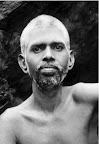
Major Chadwick was a well-known and ardent devotee of Sri Bhagavan, who stayed at the Ashram for over a quarter of a century without any thought of return to England. He used to spend many hours in meditation adhering strictly to a regular time-table. He was a model of steadfast sadhana which he kept up after Bhagavan's Mahasamadhi till the end of his life in 1962.
April 17th is observed at the Sri Ramanasramam as Chadwick Day.

The above picture of Major Chadwick's shrine was taken in January 2007.

The site Arunachala-Ramana pays him a tribute on "One of Us".

Various articles of his are available on this link.
I might add that April 14th was the date of the Mahasamadhi of Bhagavan as per the Gregorian Calendar. The Akshara Mana Malai was chanted outside the Nirvana Room at 8pm this April 14th. This year Bhagavan's aradhana will be observed on May 14th as per the Indian Calendar.

The photograph of Major Chadwick (also known as Sadhu Arunachala) is taken from arunachala.org.

His reminiscences (A Sadhu's Reminiscences) are available in pdf format (220kb) here.

Thursday, April 19, 2007

Bhagavan still at the ashram

Sadhu Arunachala (Major Chadwick) remembers the days after the maha-samadhi of Bhagavan Ramana:

At first people felt lost, they had relied too much on the personal form, though Bhagavan himself had repeatedly warned them, "You attach too much importance to this body."

Still it was only natural that this body should be missed, although as time went on, the loss became gradually less keen.

His presence was felt so strongly in the Ashram, and daily the feeling of this actual presence grew. A visitor remarked to me lately, "One does not miss the presence of Bhagavan in the Ashram, he is there just as he was before." And this is true. He is there and he is surely working and the Ashram will grow in strength and renown as time goes on. There have been dark days since that night three years ago,but those days are now past. The Ashram takes on a new life. There is a new feeling in the air and the stagnation is over. The school has been revived and pujas are performed so carefully and enthusiastically that the whole place rings with the vibrations thus set up.

I went away never to return, but he brought me back. And now I thank him every day that I have been allowed to take part in this renaissance. It is thrilling to the core to feel it happening.

One should have known that it was bound to be like this all the time. How could anything happen to the place he had sanctified with his presence for so long? The whole of India was blessed by his life, how much more so the place in which he made his home.

Monday, January 29, 2007

In Memory of Chinnaswami

On 29th January 1953, Bhagavan Ramana's younger brother, Niranjananda Swami, also known as Chinnaswami passed away. This excerpt is taken from Ramana Leela

WHAT next? Bhagavan once said, "So long as Swami
is there, nothing will happen. Later, voices will be
raised."
Bhagavan's demise became unbearable for several
bhaktas most of whom left within a couple of days.

Ramanasramam, then resembled Ayodhya after Rama's
departure, or a Vedic mantapa where the sacred fires had
been extinguished.

With the passage of time, the sorrow abated. Krishna
Bhikshu attended the first aradhana but could not stay
beyond a few hours. Even that short time was spent in
shedding tears – it was as if past memories expressed
themselves as tears. He concluded that he could no longer
visit the Ashram and for the next three years, he did not
do so. But this could not last forever. Bhagavan would
not allow one to be away forever. One who became a prey
of Arunachala could never pull back. Arunachala would
devour him.

After Bhagavan's nirvana the problems relating to the
running of the Ashram increased manifold. It was to avoid
complications in this matter that Bhagavan had got a will
prepared under the supervision of Justice Sundaram
Chettiar. According to the will, poojas have to be offered
to images in the Matrubhuteswara shrine. The Ashram
should be developed as a spiritual centre first under the
supervision of Niranjanananda Swami and later under
the supervision of Venkataraman and subsequently the
members of the family. This last condition was not
acceptable to some and they began creating problems even
during Niranjanananda Swami's time but by Bhagavan's
grace all the problems got resolved.

Unable to handle the management single-handedly,
Niranjanananda Swami formed a Managing Committee
with himself as life-President and carried on the
management according to the advice of the Committee.

The activities of the Ashram such as running the
cowshed, guest house, Veda-pathasaala, the poojas of
Matrubhuteswara, Yogamba and Srichakra were carried
out as usual with Chadwick assuming responsibility for
the Veda-pathasaala and the poojas. A sub-committee was
constituted to ensure publication of books – mostly
Bhagavan's works as well as Talks with Ramana Maharshi
(M. Venkataramaiah), diaries of Devaraja Mudaliar (Day
by Day with Bhagavan) and S.S. Cohen. The aim of the
Ashram was to publish all the works of Bhagavan.

Even the daily routine was kept up as before and this
included the various poojas and Veda-parayana at prescribed
timings.

During Bhagavan's time, Niranjanananda Swami
would seek his advice on any problem and hence did not
feel running the Ashram burdensome, but now the situation
changed. Further, at that time visitors who came to have
Bhagavan's darshan donated liberally. But later their numbers

as well as the donations gradually declined. Not only that,
some came as friends ready to help but in course of time
became hostile and turned foes. Yet others attempted to
alter the arrangement of hereditary management. Yet
Chinnaswami tried hard to carry out the management by
surrendering himself to Bhagavan. His health was impaired
and he lay sick for several months in the Ashram hospital.

He kept his peace looking at Bhagavan's photographs
hanging in the room all around. It was that Mahatma's
power that looked after him all the time.

Meanwhile, another blow struck Chinnaswami. His
younger sister, Alamelu who brought up his mother-less
son, Venkataraman and saw through his wedding, fell
grievously ill. Much earlier in 1938 Chinnaswami had
summoned Venkataraman to assist him in the Ashram
work. Alamelu and her husband Pitchu Iyer, unable to
leave the boy whom they were bringing up as their own
son, moved to Arunachala and assisted at the Ashram. As
there was a regulation that women could not stay in the
Ashram premises, after nightfall a separate house had to be
hired for their stay beyond the Ashram premises. After
some years, Pitchu Iyer was able to build a house in a
locality called Ramana Nagar. He had generous help from
Bhagavan's devotees to build the house.

Alamelu who was Venkataraman's aunt came to be
known as 'aunt' by all the ashramites. She was usually
quiet, non-interfering and sweet-tempered. She had a
profound devotion for Bhagavan and when he was ill
pleaded with him with tears in her eyes that he should

cure himself. Bhagavan said to her: "Don't be sorry, my
dear. What is to happen will happen. You leave your cares
to me and be peaceful."
After Bhagavan's niryana her health deteriorated and
she was confined to bed for six months. On 3 January 1953 she breathed her last with Bhagavan's nama on her
lips. There was an extraordinary glow on her face at the
time of her expiry.

The passing away of his sister was a great blow to
Chinnaswami. With an aching heart he thought he had
had enough of the world and begged of his Lord, Ramana,
to take him away. As his end approached on 29 January
1953, he summoned his son Venkataraman, other family
members and close associates and gave his last message to
Venkataraman:

My conscience is clear, my hands unsoiled. I had
never used Ashram funds for myself and everything
in the Ashram belongs to Bhagavan. Preserve it
carefully and utilize it wisely. Dedicate yourself
wholeheartedly to the service of Bhagavan. By doing
so, you will earn his grace in abundance. Let sraddha,
faith and truth become inalienable parts of yourself.

Uphold our tradition in the conduct of the Ashram affairs. I have toiled to uphold them.

Chinnaswami became the sarvadhikari of the Ashram
in 1930. Until be became the sarvadhikari many outsiders
did not even know who he was, he was so self-effacing. He
conducted the affairs of the Ashram for twenty two years.

Upon his passing away, Vedic mantras were chanted
and the entire Ashram reverberated with them. In the
coconut grove opposite Matrubhuteswara shrine a Samadhi
was erected for him. He did not select this spot but the
choice would have pleased him immensely.

He was a very amiable person, but was prone to get
angry at the slightest provocation. He believed in wielding
the rod to correct errant persons. He possibly was not
learned but it could be that he sought liberation through
service to Bhagavan and his bhaktas – a service which was
unremitting and unsparing. The only yoga he knew was
that of seva and perhaps his only faith was that through
seva he would earn Bhagavan's grace. As his concern for
the Ashram was uncompromising some people perhaps
did not appreciate him. He would not hesitate even to
disturb devotees from their dhyana for Ashram purposes.

And he was meticulous in accounting for money.

It was because of his dedication that quite a number
of buildings and facilities came to be provided at the
Ashram, which enabled devotees to worship Bhagavan
without any difficulty.

Standing monuments of his activities are the
acquisition and establishment of Sundara Mandiram at
Tiruchuzhi and Ramana Mandiram at Madurai. After
Chinnaswami, his son Venkataraman took over as the
President of the Board of Trustees.

Monday, November 13, 2006

Purity of Mind

Bhagavan Ramana explains about purity of mind and we link it with another question on why some seekers get a glimpse of the Self, but it is not permanent.

Mr K. R. V. Iyer (Talk 337, Jan 22, 1937): How is the mind to be purified?

Bhagavan: The sastras say: "By karma, bhakti and so on". My attendant
asked the same question once before. He was told, "By karma
dedicated to God". It is not enough that one thinks of God while
doing the karma, but one must continually and unceasingly think
of Him. Then alone will the mind become pure.

The attendant applies it to himself and says, "It is not enough that I
serve Sri Bhagavan physically. But I must unceasingly remember Him".

A question was raised as follows by Maj. A. W. Chadwick (Talk 95, Nov 13, 1935):-
 
Mr. Edward Carpenter, a certain mystic, has written in a book that he
had Self-Realisation on some occasions and that its effects lasted
sometimes afterwards, only to be gradually lost. Whereas Sri Ramana
Gita says, "Granthi (knot = bondage), snapped once, is snapped for
ever." In the case of this mystic, the bondage seems to have persisted
even after Self-Realisation. How can it be so?

Dev.: Having once experienced the Supreme Bliss, how can one stray
away from it?
Bhagavan: Oh yes! It happens. The predisposition adhering to him from time
immemorial will draw him out and so ignorance overtakes him.
D.: What are the obstacles to remaining steady in unbroken Bliss?
How can they be overcome?
B.: The obstacles are:
(1) Ignorance which is forgetfulness of one's pure being.
(2) Doubt which consists in wondering if even the experience was
of the Real or of the unreal.
(3) Error which consists in the "I-am-the-body" idea, and thinking
that the world is real. These are overcome by hearing the truth,
reflection on it and concentration.

The talk goes on ... and comes to the necessity for purity.

Devotee.: It looks then as if even hearing the Truth is limited to a very few.

Bhagavan: The seekers fall into two classes; kritopasaka and akritopasaka.
The former having already overcome his predisposition by steady
devotion, his mind thus made pure, has had some kind of experience
but does not comprehend it; as soon as instructed by a competent
master, permanent experience results.

The other class of seeker needs great effort to achieve this end.
How will the hearing of the Truth, reflection and concentration
help him?

(By a strange coincidence, this conversation happened exactly 71 years back)